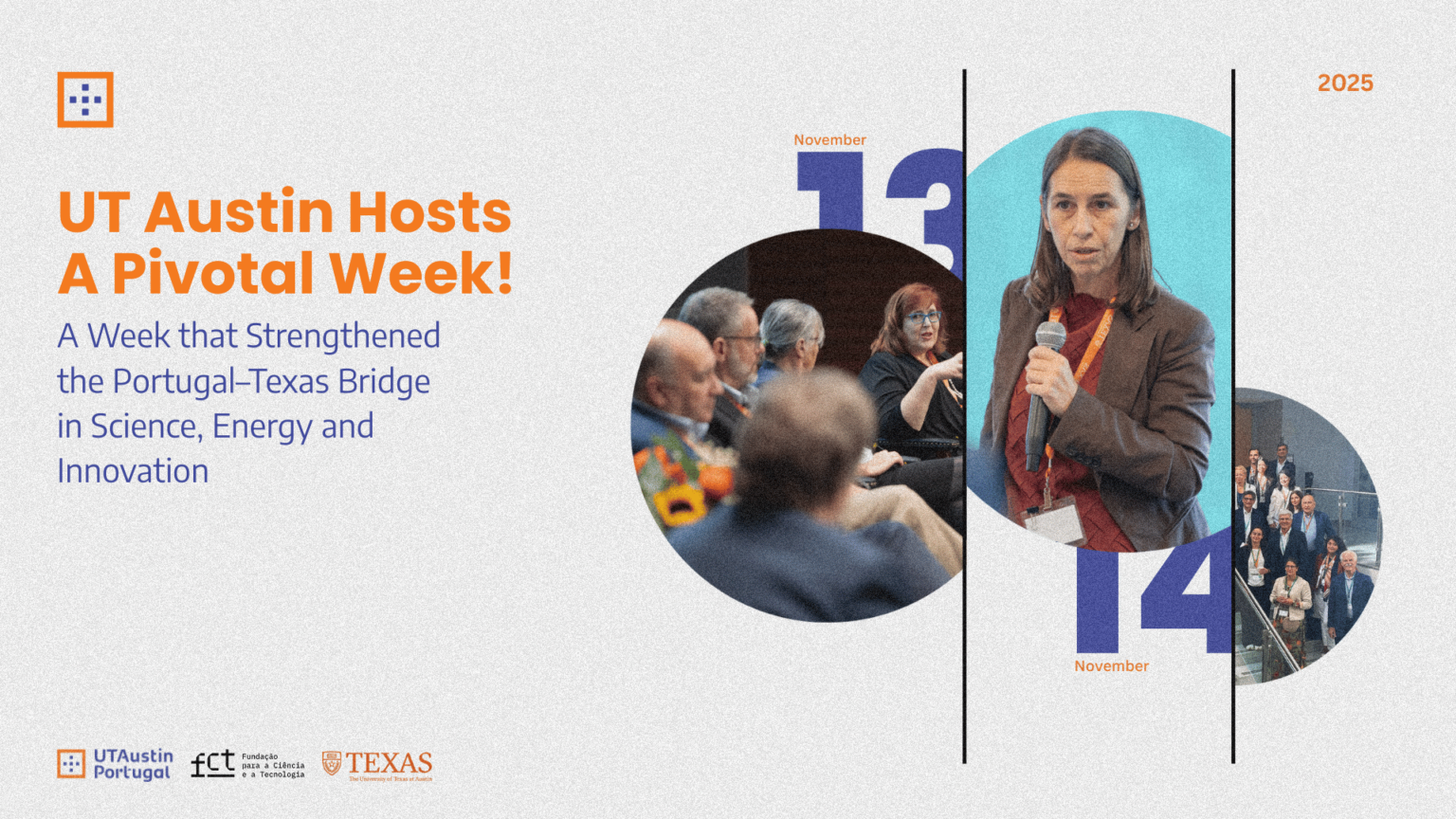
Advancing focused transatlantic scientific dialogue
Colloquia are thematic, high-level scientific meetings within the UT Austin Portugal Program, designed to enable deep technical exchange on specific research and innovation challenges of shared relevance to Portugal and The University of Texas at Austin.
They bring together researchers, institutional leaders, and selected stakeholders to foster focused dialogue, comparative analysis, and forward-looking collaboration in priority areas.
Purpose of the Colloquium
Colloquia serve as working scientific forums, with the objective to:
- Enable in-depth discussion on complex scientific and technological challenges
- Compare approaches, experiences, and evidence across contexts
- Strengthen peer-to-peer collaboration between Portuguese institutions and UT Austin
- Identify areas for sustained joint research, training, or policy-relevant reflection
They are not dissemination events, but spaces for structured scientific exchange.
A thematic and focused format
Each Colloquium is organized around a clearly defined theme, aligned with:
- The Program’s flagship Research & Innovation areas
- Emerging global challenges
- Topics requiring sustained scientific and institutional cooperation
Colloquia typically combine:
- Expert presentations and keynote interventions
- Thematic roundtables or technical discussions
- Site visits or laboratory engagement, when relevant
The exact format varies by edition and topic.
Participants and engagement
Colloquia convene:
- Researchers and scientific leaders
- Representatives from research-performing organizations
- UT Austin faculty and research units
- Selected policy, industry, or infrastructure stakeholders, as relevant
Participation is curated and thematic, ensuring depth of discussion and relevance.
Outcomes and continuity
Colloquia contribute to the Program by:
- Informing future research directions
- Supporting the identification of collaboration opportunities
- Strengthening shared understanding of complex systems and challenges
- Feeding into broader Program activities across research, education, and innovation
Outcomes may include follow-up activities such as joint initiatives, white papers, or continued technical collaboration.