October 24, 2023 – International Iberian Nanotechnology Laboratory, Braga
The UT Austin Portugal Program Annual Conference is the Program’s largest knowledge-sharing and networking event, bringing its community together with world-class speakers across academia and industry from the Partnership’s geographical scope and beyond.
As the Program moves towards the end of its third Phase, its Annual Conference returns in October with an ideation exercise that will help us understand the Program’s role in shaping Portugal’s future.
The UT Austin Portugal Program is about to complete its third funding cycle. The ideation exercise about the future, which started in 2021 with the support of the Program’s Governing Board and the External Review Committee, gathered pace in 2022. The main stakeholders in this exercise agree that future directions must consider the Program’s accomplishments over its 16-year journey and the main challenges Portugal faces now and in the coming years as a member of the international community.
What accomplishments has the Program generated that can be used to design scientific action for the most pressing societal problems? Drawing on its past outcomes and impact, where can the Program continue to make a difference in the future? Sixteen years may be considered a long time to have a return on investment with public funds. Still, one must remember that research, incredibly collaborative and international, takes a long time to establish: first, to build trust and communication, then to produce results. Moreover, impactful change in science and technology does not happen overnight.
The Partnership’s framework is in place and has been tested, fine-tuned and proven to benefit the Portuguese community and the country’s international standing. But what lies ahead? Where should the Program be looking to go on delivering unique value and expanding the breadth of its impact?
The 2023 Annual Conference wraps up the Phase 3 of the Program with an agenda that offers a platform to ideate on an ambitious future for Portugal drawing on UT Austin Portugal Partnership’s strengths.
Browse through our E-Poster Gallery to find out the interesting science researchers from the Program Areas have been performing, which is being exhibited at the International Iberian Nanotechnology Laboratory (INL).
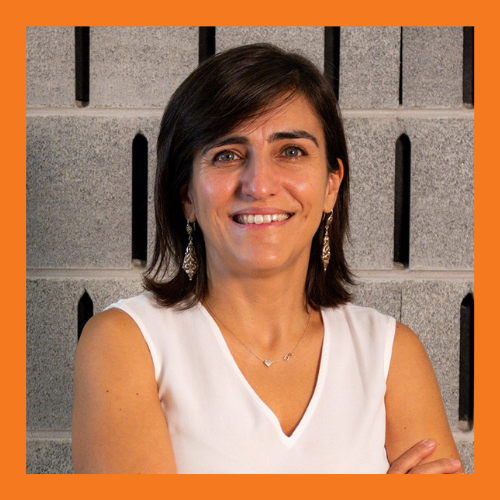
Institute for Research and Innovation in Health (i3S)

Ana Paula Pêgo got her Ph.D. in Polymer Chemistry and Biomaterials from the University of Twente, the Netherlands, in 2002. In 2003 she moved to INEB – Instituto de Engenharia Biomédica, where she became a Principal Investigator in 2012. In 2015, INEB joined the i3S – Instituto de Investigação e Inovação em Saúde (Universidade do Porto), where Ana Paula Pêgo leads the nanoBiomaterials for Targeted Therapies (nBTT) Group.
By using nanomedicine strategies the nBTT Group, aims at providing in situ and in a targeted manner the required signals to promote nervous tissue regeneration. The research on new biomaterials for application in neurosciences includes the development of new polymers for the design of alternative vectors to viruses for efficient nucleic acid delivery, the preparation of nerve grafts for spinal cord injury treatment and the design of brain tissue engineered platforms. Societal and ethical issues that concern Regenerative Medicine and NanoMedicine are also topics in which Ana Paula Pêgo is involved.
She has been appointed the Scientific Director of the Bioimaging Centre for Biomaterials and Regenerative Therapies of INEB and she is an Invited Associate Professor at the Instituto de Ciências Biomédicas Abel Salazar (ICBAS) of the University of Porto.
Currently Ana Paula Pêgo is a member of the Board of Directors of i3S, being the Head of Strategy & Creation of Value Unit, is the President of the European Society for Biomaterials (ESB), serves as an Associate Editor of Biomaterials (Elsevier journal) and is part of the Board of Reviewing Editors of Science (AAAS).
Retrieved from i3S
Texas Advanced Computing Center (TACC), UT Austin
Dr. Dan Stanzione, Associate Vice President for Research at The University of Texas at Austin since 2018 and Executive Director of the Texas Advanced Computing Center (TACC) since 2014, is a nationally recognized leader in high performance computing.
He is the principal investigator (PI) for several projects including a multimillion-dollar National Science Foundation (NSF) grant to acquire and deploy Frontera, which will be the fastest supercomputer at a U.S. university. Stanzione is also the PI of TACC’s Stampede2 and Wrangler systems, supercomputers for high performance computing and for data-focused applications, respectively. He served for six years as the co-director of CyVerse, a large-scale NSF life sciences cyberinfrastructure in which TACC is a major partner. In addition, Stanzione was a co-principal investigator for TACC’s Ranger and Lonestar supercomputers, large-scale NSF systems previously deployed at UT Austin.
Stanzione received his bachelor’s degree in electrical engineering and his master’s degree and doctorate in computer engineering from Clemson University, where he later directed the supercomputing laboratory and served as an assistant research professor of electrical and computer engineering.
Retrieved from: Texas Advanced Computing Center.
Portuguese Foundation for Science and Technology (FCT)
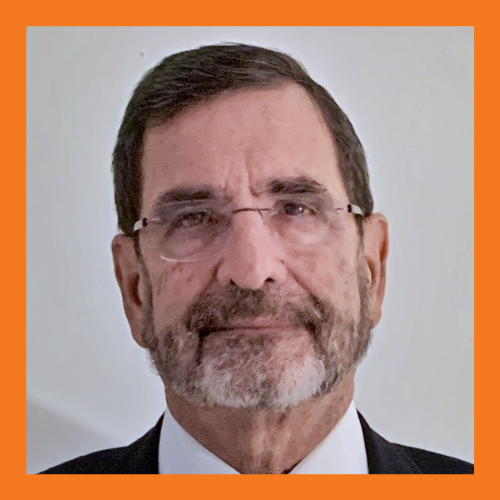
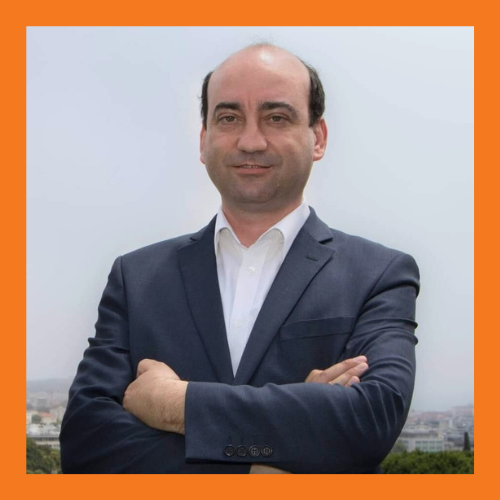
PhD in Economics from ISCTE-IUL. Since July 2022 he has been a member of the Board of Directors of FCT – Foundation for Science and Technology. Between May 2021 and June 2022 he was Executive Coordinator of the “Impulso Jovens STEAM” and “Impulso Adultos” (Recovery and Resilience Plan) Programs, at the General Directorate of Higher Education. He was a member of the Board of Directors of ANI – National Innovation Agency (2018-2021), as well as the Executive Committee of FITEC – Innovation, Technology and Circular Economy Fund.
Since 2001, he has collaborated with several members of the Government in the area of Innovation Policy, having been part of the design, management and monitoring teams of PROINOV (Integrated Innovation Support Program), as Deputy to the Prime Minister’s Office, of the XIV Constitutional Government (2001-2002); the Technological Plan and Lisbon Strategy (2006-2009); the Digital Agenda (2015) and National Reform Plan (2009-2011); of the Portugal Digital Agenda and the National Program for Entrepreneurship and Innovation, (2011-2013).
He was also manager of innovation projects at UMIC – Innovation and Knowledge Mission Unit, Presidency of the Council of Ministers and collaborated with CEiiA – Center for Engineering and Product Development in the area of Smart Cities. He also has experience as a teacher in Higher Education, being the author of several articles in scientific publications and academic books and opinion articles in the areas of innovation, technology and digital.
Consultant
Consultant
Currently an Independent Consultant, he has a long experience in the areas of energy, Innovation, Telecommunications, Computer Science and Power Systems Innovation, Telecommunications, Computer Science and Power Systems Innovation. He was CEO of EDP Inovação for 14 years. He was General Manager of EDP, Executive Board Member of EDP Ventures and had management positions in several companies of the EDP Group, with a deep involvement in the selection and fostering of new technologies in the Clean Tech domain, for usage within EDP. He was part of the management team that launched Optimus, today NOS. He was part of the team that created Edinfor, which today is part of CGI. He graduated in electrical engineering at Instituto Superior Técnico, where he taught Transitory Regimes in Electrical Machines and Networks.
Retrieved from LinkedIn and ECO (Sapo.pt)
Energy Institute, UT Austin
Brian directs the Industry/University Cooperative Research Center (IUCRC) for a Solar Powered Future (SPF2050), the Nanotechnologies area of the UT Austin Portugal Program at UT, and serves as Associate Editor of the journal, Chemistry of Materials. He is a former Fulbright Fellow and has been Visiting Professor at the University of Alicante in Spain, the Université Josef Fourier in France and the Chinese Academy of Sciences in Beijing. He received his PhD in Chemical Engineering from UCLA in 1997 and was a post-doctoral fellow at University College Dublin, Ireland, in the Department of Chemistry. He has given more than 260 invited talks and published more than 280 papers. He is also an artist, exploring language and human/technology cohabitation. He has co-founded two companies, Innovalight and Piñon Technologies, and received various honors including the 2012 Professional Progress Award from the American Institute of Chemical Engineers (AIChE) and election to Fellow of the American Association for the Advancement of Science (AAAS). He is also a member of the National Academy of Engineering (NAE).
Galp
Economist, MBA, former investment banker and venture capitalist, Carla initiated her journey in the Energy industry in 2008 where she was exposed to cleantech companies from all over the world. Her passion for innovation, willingness to learn and bring new business into the scene has never stopped since then. Working alongside with the best tech companies gives her inspiration, resiliency, and agility skills that she adopts on a daily base and helps her as a corporate innovation leader to succeed inside large energy players. Carla is 45 and mother of two. Being connected with people worldwide and exposed to different cultures, gives her motivation and creativity to carry on, and helps her to be open minded and forward thinking.
U.S. Department of State
Amal Moussaoui Haynes is an American diplomat at U.S. Department of State in the Science and Technology Cooperation Office of the Bureau of Oceans and International Environmental and Scientific Affairs. Over the past 3 years she oversaw an increase in research and development collaboration between the U.S. and the EU in support of climate neutral, critical, and emerging technologies such as AI, and quantum, as well as the renewal of the U.S. – EU Science and Technology Agreement. Amal has served at several U.S. Embassies in Europe and Middle East and is fluent in French and Arabic. She previously worked in the financial sector in New York. In July 2023 she received her Executive Master in Business Administration degree from Oxford University.
University of Texas at Austin
Emanuel Tutuc is a Professor and holds the B. N. Gafford Professorship in Electrical Engineering in the Chandra Family Department of Electrical and Computer Engineering at The University of Texas at Austin.
Dr. Tutuc received his B.S. in Physics from Ecole Normale Supérieure, University of Paris in 1997, his M.S. in Electrical Engineering in 1999 and Ph.D. in Physics from Princeton University 2004. He held research positions at Princeton University and I.B.M. T.J. Watson Research Center from 2004 to 2006. He joined the faculty of The University of Texas at Austin within the Department of Electrical Engineering and the Microelectronics Research Center in the spring of 2007. His current research is centered on the electronic properties of quantum confined systems, novel semiconductor materials and devices, and chemical vapor deposition. Prof. Tutuc has received a DARPA Young Faculty Award in 2008, and a CAREER award from the National Science Foundation in 2009.
Retrieved from: Chandra Family Department of Electrical and Computer Engineering.
EDP Renewables
EDP Renewables
João Maciel is the Managing Director of EDP’s Centre for New Energy Technologies, dedicated to applied R&D in the energy sector. He was the former Technology Development Director of EDP Inovação. João served on the Board of other EDP R&D initiatives, namely the WindFloat Project. He has 20 years of experience working in the energy sector. João holds a Electrical Engineering – Power Systems degree from Lisbon University, an MBA from Portuguese Catholic University and advanced management studies from the London Business School.
UT Austin Portugal Program, UT Austin
John G. Ekerdt was Associate Dean for Research in Engineering and the Dick Rothwell Endowed Chair in Chemical Engineering at the University of Texas at Austin. Using chemical and kinetic probes to unravel reaction pathways, mechanisms and reaction rates, his research has explored: 1) kinetics of single crystal, nanoparticle and ultrathin film growth, 2) chemistry that controls film and nanoparticle nucleation on surfaces and 3) relationships between precursor molecular structure, its reactivity and the properties of the electronic material that is grown. Current research interests focus on the surface, growth and materials chemistry of metal, dielectric and perovskite films and nanostructures.
UT Austin Portugal Program, Portugal
José Manuel Mendonça is a Professor at the School of Engineering of the University of Porto, and Chairman of the Board and CEO of INESC TEC. José Manuel Mendonça graduated in Electrical Engineering at the School of Engineering, University of Porto, and obtained his Ph.D. in Electrical Engineering at the Imperial College of Science and Technology, University of London. Currently, he is also a Fellow of the IC2 Institute of the University of Texas, Austin, and a member of the High-Level Group of the European Technological Platform Manufacture.
University of Lisbon
Killian Lobato is an Assistant Professor at the Faculty of Sciences of the University of Lisbon. Since his PhD days (graduated 2007 from University of Bath) he has worked on nanomaterials for energy conversion and storage. He also has other research interests, such as Solar Resource in Complex Urban Environments and Operation and Maintenance of Photovoltaic systems. Regarding his research in nanomaterials for energy conversion and storage, he currently works on the development of nanostructured metal oxides for perovskite solar cells, laser structured carbon-based supercapacitor electrodes, laser annealing for CIGS solar cells, and quantum tunnelling junctions formed by laser doping for silicon/perovskite monolithic tandem solar cells. He lectures undergraduate and postgraduate courses in Solar PV materials and technologies, solar resource, electrochemical energy storage & conversion, and management of renewable energy systems.
Galicia Supercomputing Center
Lois Orosa is the director of the Galicia Supercomputing Center (CESGA). Previously, he was a senior researcher at SAFARI research group at ETH Zürich, lead by Prof. Onur Mutlu. His research interests include memory systems, hardware security, machine learning, microarchitecture, storage systems, processing in memory, and more.
Orosa earned his PhD from University of Santiago de Compostela (USC) under the supervision of Prof. Elisardo Antelo and Prof. Javier Bruguera. During the PhD, he visited I-ACOMA research group at University of Illinois at Urbana Champaign, lead by Prof. Josep Torrellas. He also adquired industry experience in IBM R&D Labs at Haifa (with Olga Golovanevsky’s, Marina Biberstein, and Bilha Mendelson), and Recore Systems at Enschede. After the PhD, Orosa continued his research on computer architecture with several groups in Industry and Academia, including Universidade Nova de Lisboa with Prof. Joao Lourenco, LSC group at Unicamp, with Prof. Rodolfo Azevedo, and Xilinx Research Labs at Dublin, with Michaela Blott and Yaman Umuroglu.
UT Austin Portugal Program
Peter Arzberger is the Founding and former chair of the Pacific Rim Application and Grid Middleware Assembly (PRAGMA), an NSF-funded activity, established in 2002, comprising over twenty institutions, to promote collaboration of small research groups on developing and using an international cyberinfrastructure. In 2005, a PRAGMA experiment using wireless technologies in ecology, he helped launch the Global Lake Ecological Observatory Network (GLEON) that uses sensor, network, and data technologies to share data from multiple lakes to understand responses of lakes in a global changing environment, that changed the careers and research questions of its many participants. Within the PRAGMA framework, he co-established a program, PRIME, that over its lifetime provided international internship experiences to nearly 200 undergraduate students.
Throughout his career, Dr. Arzberger served multiple times and in multiple positions at the United States National Science Foundation, in areas of probability and statistics, computational biology, high-performance computing, and computer and networking systems.
Currently, he serves as the Chair of the University of Texas Portugal External Review Committee. He is also writing two novels.
University of Minho
University of Minho
Miguel Nóbrega is Associate Professor at the Polymer Engineering Department of the University of Minho, and member of the Institute for Polymers and Composites. In 2004, he received his PhD degree from the University of Minho, in Polymer Science and Engineering. He is the Digital Transformation in Manufacturing area leader of the MIT Portugal program, editor of OpenFOAM Wiki, founder member of the Iberian OpenFOAM Technology Users and member of the OpenFOAM Workshop Committee.
His research activity lies in three overlapping areas: product development, polymer processing and material rheology. For this purpose, he has been developing computational rheology tools to model the behavior of complex materials in various manufacturing processes. Regarding the product development area, he has been involved in the design and manufacture of products for several fields, comprising applications for health, textile, sensoring/monitoring, construction and mobility. He uses the open-source computational library OpenFOAM as a base for the numerical developments. Based on his computational modelling activity/skills, he has been promoting the use of simulation to support the decision process in industrial design/manufacturing activities.
He was/is involved in the supervision/co-supervision of 13 Post-Doctoral Researchers, 43 MSc Dissertations, 15 PhD Thesis (9 completed), in 36 scientific research projects (6 as project leader) and 32 applied research projects for private companies (25 as project leader). He edited 2 books and he is author/co-author of 12 book chapters, 23 conference papers, 108 papers published in international refereed journals, 8 patents (3 international) and more than 250 communications presented in conferences (25 invited and 2 plenary lectures).
University of Minho
University of Minho
Nuno Castro is Vice-President for Research and Scientific Innovation of the School of Sciences of the University of Minho, Professor of Physics, and Researcher at the Portuguese Laboratory for Experimental Particle Physics (LIP).
He is also a member of the LIP’s board of Directors, responsible for the advanced training at LIP and coordinator of the LIP Competence Center in Simulation and Big Data, as well as President of the Board of Directors of INCD – the National Infrastructure for Distributed Computing. At the University of Minho, Nuno Castro teaches courses in general physics, computational physics, radiation physics, data analysis and particle physics.
Nuno Castro is an active member of the ATLAS Collaboration at CERN since 2004, focusing mainly on the search for new physics phenomena in the top quark sector and In advanced computing for data analysis. Nuno Castro is currently a member of the Speakers Committee of the ATLAS Collaboration and co-convenor of the LHC working group for effective field theory.
University of Aveiro
Paula Vilarinho is Associate Professor at the University of Aveiro since 2000 and member of the Associate Laboratory, Centre for Research in Ceramics and Composite Materials (CICECO).
She was Visiting Professor at the Department of Materials Science and Engineering of North Carolina State University, USA, in 2001 and Visiting Professor at the Department of Materials Science and Engineering, University of Sheffield, United Kingdom in 2008.
Her teaching activities include topics on the synthesis, processing and characterization of materials, such as Microsctructure and Interfaces, Advanced Processing Techniques, Materials Processing Technologies, 2D 3D Structures, Functional Materials, Properties of Materials, among others, for under graduate, master and doctoral studies.
She is a member of the Editorial Board of Scientific Reports (from Nature Publishing Group), Practical Metallography and International Scholarly Research Network – ISRN Ceramics. She is a member of the Portuguese, European and American Materials Research Societies and Microscopy Societies. She has been acting as referee in the selection of Portuguese and European R&D projects (European Research Council and various European States Research Agencies) as well as a frequent referee of SCI journals. She was the former President of the Portuguese Society of Microscopy (2010-2011).
National Innovation Agency
With over 15 years of experience in industry, Sílvia has worked mainly in technological innovation, in both public and private sectors. In recent years, she has focused on the development of ideas and their implementation through multidisciplinary R&D projects (both national and international) and establishment of strategic partnership with the National Scientific and Technological System (SCTN) to promote new technological areas.
Sílvia led the Innovation and Development Laboratory (INCMLAB) of the Imprensa Nacional Casa da Moeda, having actively contributed to its creation and development, and was also responsible for the launch and creation of the company’s innovation award (IN3+ Award).
She was a senior researcher at ISQ (Welding and Quality Institute), where she also held a senior technical position in industrial sustainability. At the Portuguese Environment Agency, she worked as a senior technician in industrial licensing, also having as a mission the monitoring of public policies with the European Union, namely in environmental responsibility. She began her career as a researcher first at IBET (Institute of Experimental and Technological Biology), having passed through ITQB (Institute of Chemical and Biochemical Technology-António Xavier) and FCT-UNL (Faculty of Science and Technology, New University of Lisbon).
Sílvia Garcia has a PhD in Biotechnology, a post-graduate degree in Industrial Management and a degree in Chemical Engineering from Faculdade Nova de Ciências e Tecnologia (FCTNOVA).
As a volunteer, she was the coordinator of the Artificial Intelligence task force of APDSI (Association for the Promotion and Development of the Information Society), responsible for analyzing, discussing, disseminating trends, and promoting the debate on the use of Artificial Intelligence in the public and private sectors, as well as developing reflection and strategic thinking to demystify Artificial Intelligence.
International Iberian Nanotechnology Laboratory (INL)
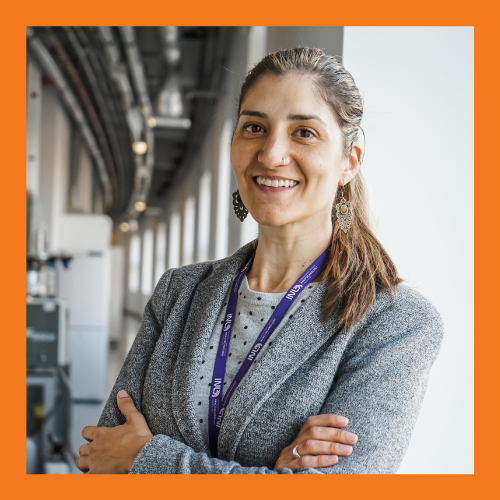
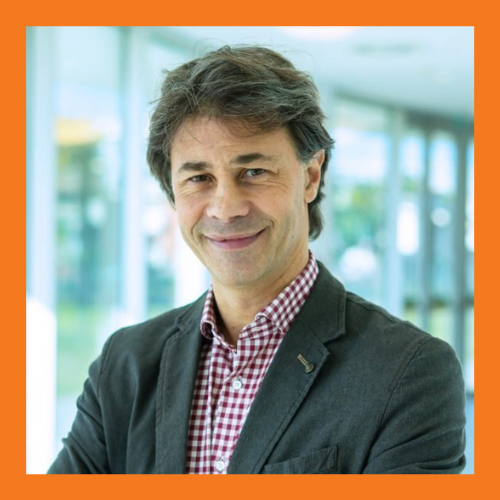
Paulo Freitas has a BSc in Physics from the University of Porto and a PhD in Physics from Carnegie Mellon University (1986). After his PhD at Carnegie Mellon University, he was a postdoctoral Research Fellow at the IBM Watson Research Center, Yorktown Heights, New York, USA (1986-87). From 1990 to 2000, he was Director of the Solid State Technology Group at INESC and since 2000, Director of INESC-MN. Professor Freitas has been a full professor of Physics at the Instituto Superior Técnico since 2003, administering the Department of Physics since 2006. In 2007, he joined the Installation Commission of the International Iberian Nanotechnology Institute (INL) and was appointed Deputy Director General in 2009. Starting September 1st 2022 was appointed Director-General Interim.
Professor Freitas received several awards and distinctions, namely: the Fundação Calouste Gulbenkian Prize in the area of Nanotechnologies, as PhD supervisor of H. Ferreira (2004); the Prémio Excelência, from the Portuguese Foundation for Science and Technology (2005-2006); the 2nd Finalist of Descartes Prize for Research (2007), awarded by The European Commission; and a Distinguished Lecturer award from the IEEE – Institute of Electrical and Electronic Engineers, USA (2008).
Professor Freitas’ current research interests include GMR heads for ultra-high density recording, spin-dependent tunnelling junctions, non-volatile memories, magnetic multilayers and thin films, micro magnetism, transport phenomena, GMR sensors, bioelectronics and biosensors. He is the author of more than 250 scientific articles, one patent and the inventor of a bioelectronic device. Professor Freitas supervised 9 PhD students and develops an intense educational mission to train and coach new scientists and engineers.
Retrieved from INL
International Iberian Nanotechnology Laboratory (INL)
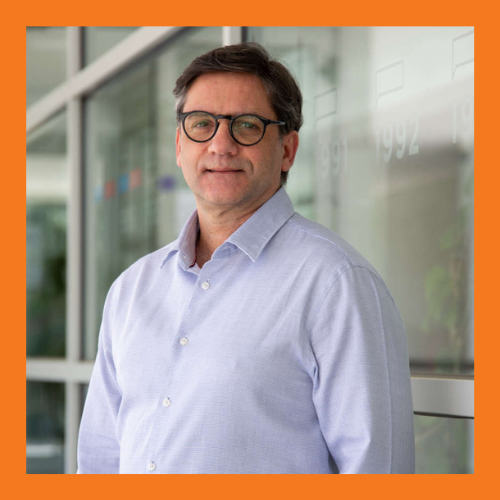
Lorena Diéguez is the leader of the Medical Devices research group at INL. Her research is mainly devoted to Translational Medical Research in close collaboration with hospitals and focuses on the development of tools and solutions based on microfluidics, biosensors and nanotechnology towards early diagnosis and better understanding of diseases.
She is also very interested in translating her technology from the lab to the clinic and is co-founder and CEO of the spin-off company RUBYnanomed in the field of liquid biopsy. Between 2020 and 2021, she was part of the coordination team of INL’s Precise Personalised HealthTech cluster. Also, since 2019 and to date, she is the Chair of the Working Group in Medical Devices at the ETPN (European Technology Platform in Nanomedicine).
She obtained her Bachelors in Physics with Major in Optoelectronics at the University of Santiago de Compostela in 2005, then completed her Masters in Nanotechnology at the University of Barcelona (UB) in 2007 and her PhD in biosensors at the UB, the Institute for Bioengineering of Catalonia and the ETH Zürich. Her postdoc at the University of South Australia (2010-2013) was devoted to the study of rare cells from biological samples using microfluidics. Lorena joined INL in 2014 as Staff Researcher, before being promoted to Research Group Leader in 2018.
She has published over 41 peer-reviewed research articles and reviews, 2 book chapters, has over 900 citations and an h-index of 17. She has participated in 26 national and international research projects, 17 of them as PI, and 6 of them as coordinator. She has also authored 5 patents, and been invited, keynote or plenary speaker in over 30 international conferences. She has also been recipient of several international research and innovation awards.
International Iberian Nanotechnology Laboratory (INL)
Paulo Ferreira is currently the Head of the Advanced Electron Microscopy, Imaging and Spectroscopy Center and the Leader of the Atomic Structure-Composition of Materials Group at the International Iberian Nanotechnology Laboratory (INL), Portugal. He is also a Full Professor in the Department of Mechanical Engineering at IST, University of Lisbon, Portugal and an Adjunct Professor, Robert & Jane Mitchell Endowed Faculty Fellowship in Engineering in the Materials Science and Engineering Program at the University of Texas at Austin, USA. He has a Ph.D. in Materials Science and Engineering from the University of Illinois, USA and has done his Post-doctoral work at MIT in Materials Science and Engineering. He concentrates his scientific research in the areas of Materials Science, Nanomaterials and Electron Microscopy applied to alternative energy materials and 2D materials.
UT Austin Portugal Program, Portugal
Rui Oliveira is an associate professor at the Informatics Department of the University of Minho, where he teaches Distributed Systems in undergraduate, master and doctoral courses. He has been the director of the Computer Science and Technology Center (CCTC) from 2005 to 2010 and director of the High-Assurance Software Laboratory (HASLab), a research unit of the University of Minho and INESC TEC, from 2010 to 2015. He is a member of the Board of Directors of INESC TEC. He is the coordinator of the Minho Advanced Computing Center and National Contact Point to EuroHPC.
He received his Ph.D. degree in 2000 from the École Polytechnique Fédérale de Lausanne under the supervision of André Schiper and Rachid Guerraoui. In this work, he studied the distributed consensus problem in an environment where participants could fail by crashing and then recover. His research interests are in dependable distributed systems, in particular with application to dependable distributed database systems and large scale systems. His work has been focused on epidemic communication protocols, large scale data management and high-performance transactional middleware for cloud computing and data science. Rui Oliveira has been involved in several research projects funded by the EU, FCT and national and international companies, having coordinated the FP6 GORDA, ESCADA, StrongRep, Stratus and H2020 SafeCloud projects.
He currently serves on the Steering Committees of the IEEE SRDS, ACM/IFIP/USENIX Middleware and IFIP DAIS conferences, of the Atlantic International Research Center (AIR Center) and the Collaborations to Enable Transnational Cyberinfrastructure Applications (CENTRA). He is vice-chair of IFIP Working Group 6.1.
Institute for Systems and Computer Engineering, Technology and Science (INESC TEC)
Ricardo Bessa was born in 1983 in Viseu, and received his Licenciado (5-years) degree from the Faculty of Engineering of the University of Porto, Portugal (FEUP) in 2006 in Electrical and Computer Engineering. In 2008, he received the M.Sc. degree in Data Analysis and Decision Support Systems from the Faculty of Economics of the University of Porto (FEP). He obtained his Ph.D. degree in the Doctoral Program in Sustainable Energy Systems (MIT Portugal) at FEUP in 2013. Currently, he is Coordinator of the Center for Power and Energy Systems at INESC TEC. He worked on several international projects such as the European Projects FP6 ANEMOS.plus, FP7 SuSTAINABLE, FP7 evolvDSO, Horizon 2020 UPGRID, Horizon 2020 InteGrid, H2020 Smart4RES, H2020 InterConnect, HORIZON ENERSHARE, and an international collaboration with Argonne National Laboratory for the U.S. Department of Energy. At the national level, he participated in the development of renewable energy forecasting systems and consultant services about energy storage and AI. Associate Editor of IEEE Transactions on Sustainable Energy and received the ESIG Excellence Award in 2022. He is co-authors of more than 60 journal papers and 120 conference papers, and IEEE Senior Member.
Retrieved from: INESC TEC
October 24 @ INL
Check-in starts at 8:45 a.m.
| 9:30 a.m. | Opening Session |
| 10 a.m. | A review of Phase 3 through the lens of the External Review Committee, with Peter Arzberger |
| 10:20 a.m. | Envisaging the Program’s Future: Steering Scientific Domains to Key Societal Missions |
| 10:30 a.m. | Our Energy Future | Keynote Speech with John Ekerdt | Chair: Killian Lobato |
| 11:30 a.m. | Coffee-Break |
| 12 noon | Clean Energy – Opportunities for Portugal (Round Table #1), moderated by António Vidigal |
| 1:15 p.m. | Networking lunch + E-Poster Exhibition |
| 2:45 p.m. | Contributions of Nanotechnology to the UT Austin Portugal Mission (Round Table #2), moderated by Paulo Ferreira |
| 3:50 p.m. | The Importance and Opportunity of Advanced Computing Infrastructures for Research and Innovation (Round Table #3), moderated by Nuno Castro |
| 4:50 p.m. | The Future of Scientific and Technological Cooperation between the EU and the US |
| 5:20 p.m. | Closing Remarks |
| 5:30 p.m. | Afternoon Reception |
With Peter Arzberger, Chair of UT Austin Portugal Program’s External Review Committee
A captivating session led by the esteemed Chair of the Program’s External Review Committee, Peter Arzberger, who will share the Committee’s perspective on the program’s journey during Phase 3 and also its recommendations to chart a course for even more remarkable achievements, based on the independent assessments carried out between 2019 and 2022.
With José Manuel Mendonça, National Director of the UT Austin Portugal Program (PT)
The Program’s Leadership takes stock of the work that has been carried out with the support of key stakeholders to set a vision for the Partnership beyond 2023. The way forward draws on this community’s 16-year legacy to steer its scientific and innovation capabilities to some of the most pressing societal challenges.
With John G. Ekerdt (UT Austin) as Keynote Speaker and Killian Lobato (University of Lisbon) as Chair
Our Energy Future
Climate change, energy security, energy equity and sustainable growth are major drivers shaping our energy future. Green hydrogen will be pivotal in addressing these drivers. Hydrogen is needed in decarbonizing manufacturing processes through electrification, and the transportation sectors directly or through electric vehicles. Long-term hydrogen storage and chemical conversion of hydrogen to alternate liquid fuels, including methanol and ammonia, can overcome the intermittency of solar and wind power. Portugal and Texas have an abundance of solar irradiance and wind providing the energy to produce green hydrogen through hydrolysis, and are natural partners to advance this energy future. Our academic institutions have the expertise to undertake the necessary research and the infrastructure to educate the workforce who will ultimately lead this energy future. The energy future will require an ecosystem that values fundamental research, fosters innovation and encourages start-ups. Realizing this future will also require investments in research on decarbonization of industrial manufacturing through electrification of process heating, materials discovery for multijunction photovoltaic solar cells, and power grid solutions across all scales to address intermittency, to list a few examples.
With António Vidigal moderating the discussion between Energy thought leaders from the US and Portugal: Brian Korgel (UT Austin Energy Institute), Carla Tavares (Galp), João Maciel (EDP Renewables) and Ricardo Bessa (INESC TEC).
As more countries accelerate their transition to clean energy sources, Portugal, with its unique geographical and climatic advantages, stands poised to play a pivotal role in shaping a greener future through research and deployment of fossil-free energy solutions.
Also, The University of Texas at Austin (UT Austin) has been leaving its footprint in the global energy transition by spearheading innovative research, fostering cross-disciplinary collaborations, and educating the next generation of leaders who will drive sustainable and transformative energy solutions.
Join us on an exciting session to explore the path forward, share ideas, and understand the benefits of extending the ongoing collaboration with UT Austin to the energy field to unlock the potential of clean energy in Portugal.
With Paulo Ferreira (INL) at the helm, this round table brings together high-calibre discussants from the Program’s transatlantic community: Ana Pêgo (i3S), Emanuel Tutuc (UT Austin), Lorena Dieguez (INL) and Paula Vilarinho (University of Aveiro).
Nanotechnologies’ potential to drive innovation, improve sustainability, and enhance quality of life makes it a key driver of progress in the 21st century. The pool of talent, knowledge and resources the Program and its transatlantic community have successfully mobilized in Nanotechnologies for almost a decade makes it impossible to ideate the Program’s future without them.
This panel brings experts from both sides of the Partnership to discuss where the collaboration in Nanotechnologies between Portuguese research and innovation actors and The University of Texas at Austin can be more strategic for Portugal and the country’s international standing.
Nuno Castro (UMinho; CERN) challenges a high-level panel to discuss the significance and importance of advanced computing infrastructures: Sílvia Garcia (ANI), Dan Stanzione (The Texas Advanced Computing Center), Lois Orosa (Galicia Supercomputing Center) and Miguel Nóbrega (UMinho).
In today’s rapidly evolving technological landscape, advanced computing infrastructures have become indispensable tools for driving research and innovation across a myriad of fields. Not only do they empower researchers to simulate complex phenomena, analyze large datasets, and model intricate systems in fields as diverse as climate science, healthcare, and materials engineering, they are also poised to foster innovation, by providing a platform for collaboration between academia, industry, and government agencies.
As Portugal expands its supercomputing capabilities – Deucalion, the European High-Performance Computing Joint Undertaking supercomputer located in Portugal, was inaugurated last September, becoming the latest addition to EU’s expanding family of EuroHPC supercomputers – this round table will explore the importance and significance of these infrastructures to advance research and development and fuel innovation.
A US diplomat will analyse the importance of R&D cooperation between the EU and the US. A talk that will help improve the understanding of the Program’s past and future contribution to Portugal’s alignment with the EU-US S&T cooperation agenda.
Recently, US and EU officials have agreed to expand R&D collaboration on cancer, climate change, green aviation and other fields and foster research training and mobility, indicating a further warming of transatlantic science relations.
With our eyes laid on the future of the UT Austin Portugal Program after December 2023, this session will be a stock-taking exercise of the long-standing EU-US partnership in Science and Technology (S&T), also to help us understand how bilateral Programs like ours can contribute to the goals of the transatlantic alliance which has reached a new stage of maturity and trust.
This year the UT Austin Portugal Program Annual Conference is back to the same city that hosted the first Conference of Phase 3: Braga! Only this time we will meet at the International Iberian Nanotechnology Laboratory (INL), home of cutting-edge research and development in nanotechnology. INL reunites the expertise and innovation of more than 450 researchers from all over the world, creating the perfect setting to celebrate this partnership that has been connecting Portugal and Austin for 16 years!
If you have any queries, do not hesitate to contact the Conference Local Organizing Team at
events@utaustinportugal.org.