
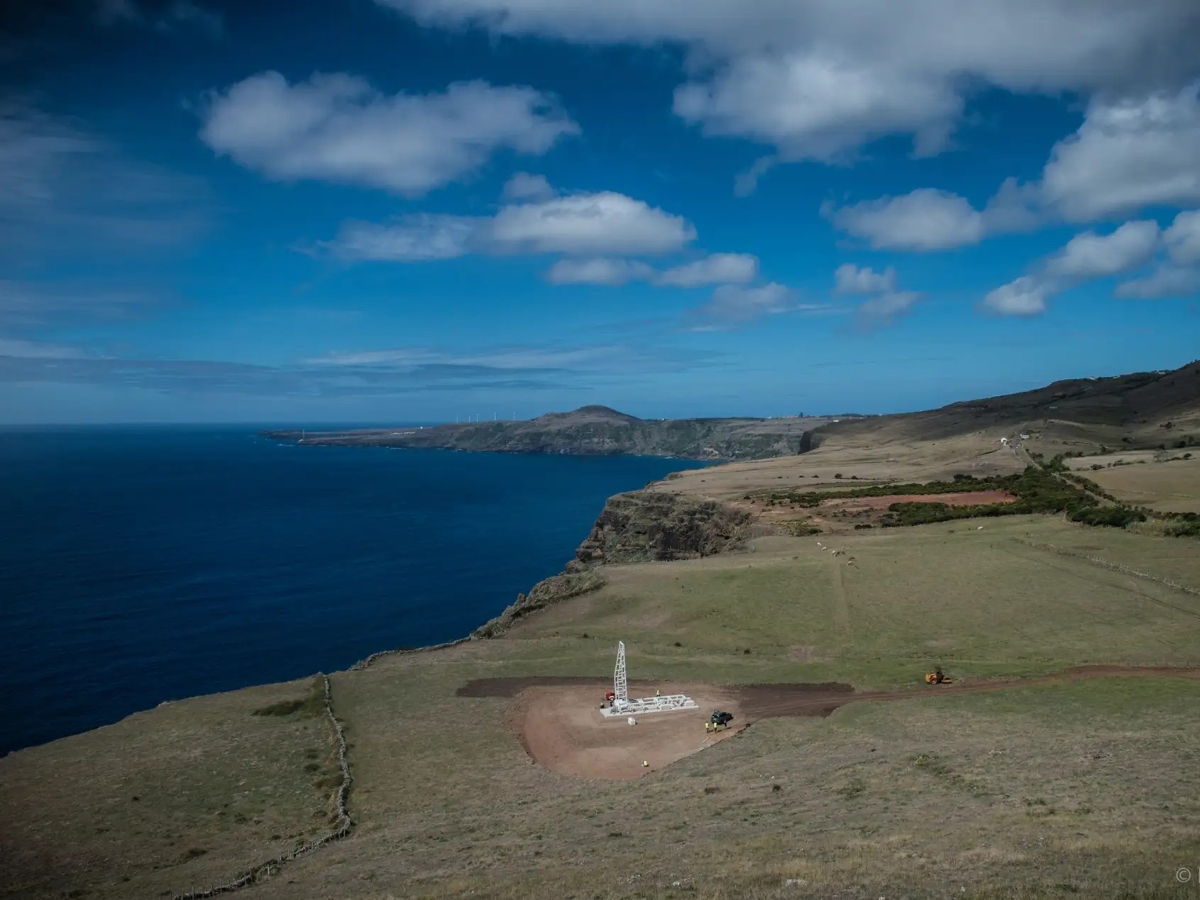
Portugal licenses its first-ever spaceport following UT-led feasibility study.
A historic moment in Portugal’s space history has Longhorn finger(hoof)prints all over it.
After nearly a decade of planning, the first space infrastructure in Portugal was officially licensed for operation in late 2025. This monumental development received key support from the UT Austin Portugal Program, Portugal’s long-standing scientific joint venture with UT, in its early phases.
From Recommendation to Reality
In 2017, the Portuguese government commissioned a team of researchers from UT Austin and The University of Texas at El Paso to lead a feasibility study for a spaceport in the country’s Azores Islands. This past August, Portugal’s National Space Authority (ANACOM) officially granted the Portuguese Atlantic Spaceport Consortium (ASC) a license to operate space activities in Malbusca, located on the southernmost island of Santa Maria. It will be the first space infrastructure to be operated on national territory, marking a major development in the country’s path to autonomy in space exploration.